
Our Farm
Welcome to our cocoa farm, where nature and agricultural expertise come together to shape the future of premium Dominican cocoa.
Our farm is nestled between Bayaguana, in Monte Plata province, and San Antonio de Guerra, in Santo Domingo province. Surrounded by forests grown for biomass production and semi-natural woodlands bordering local waterways, it forms part of a wider forest landscape. The Yacao River flows through the property, connecting our agricultural activities with the ecosystems we seek to protect.
From Establishment to the First Commercial Harvests
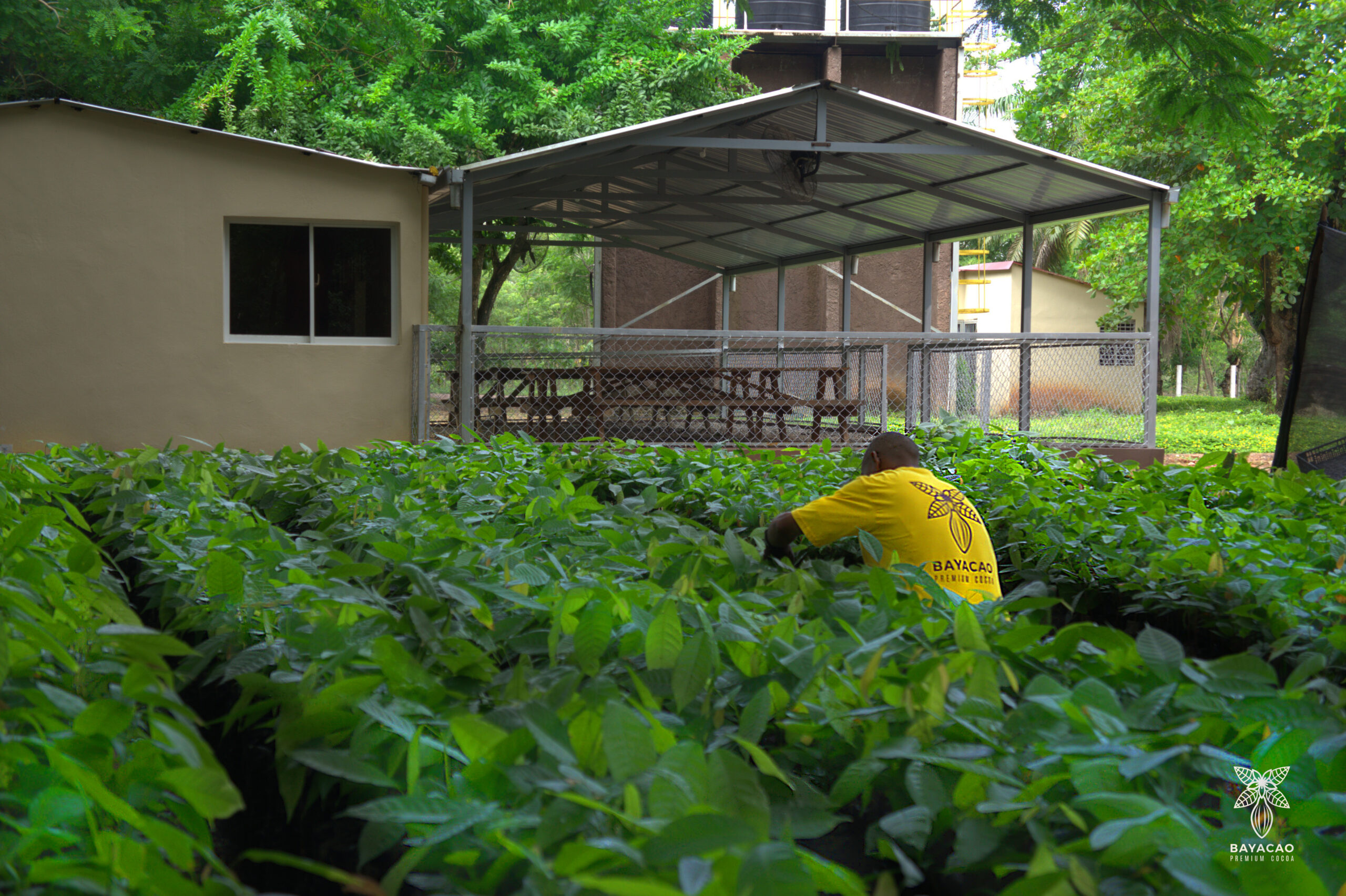
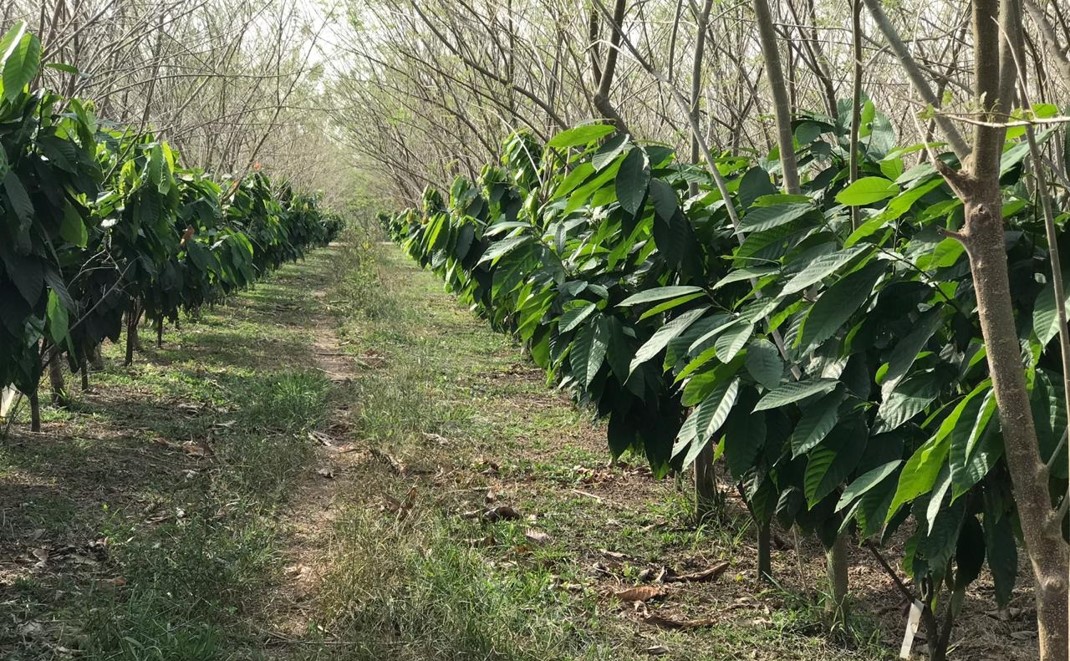
At our farm, we take pride in our mission to regenerate former pastures through careful agricultural development. Since 2018, our agronomists and field teams have worked to establish a cocoa plantation designed to combine quality, sustainability, and the operational discipline of an industrial estate.
In late 2022, a new management team took over the project, supported by renewed investor confidence and funding. This marked the beginning of a new phase: strengthening field management, improving infrastructure, planting and replanting cocoa, establishing shade trees and windbreaks, and creating better conditions for both our trees and our people.
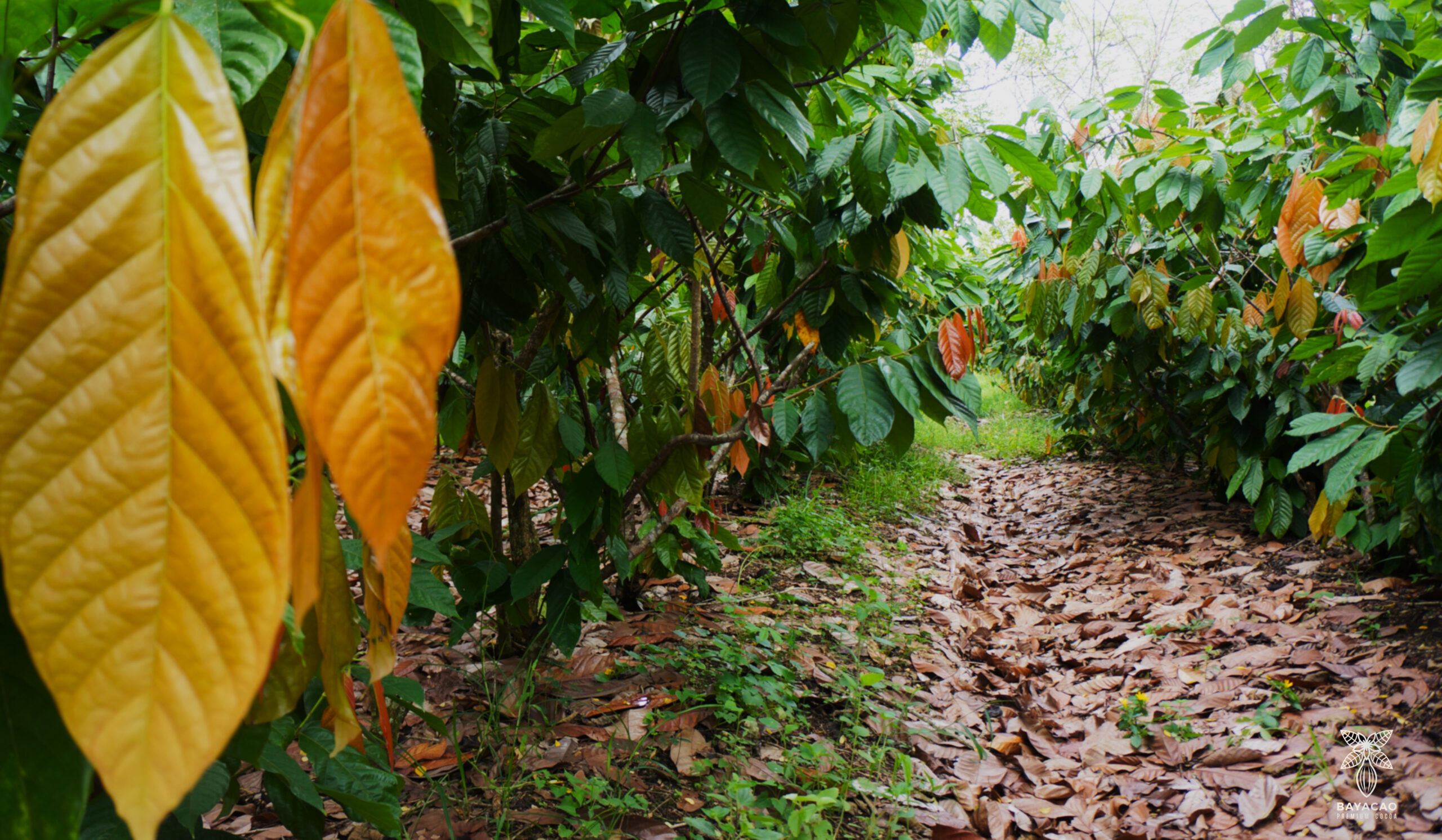
The planting programme developed from 2023 onwards has progressively shaped the plantation we see today. Alongside cocoa, shade trees such as Gliricidia sepium and windbreaks including Acacia mangium contribute to the development of a more balanced agricultural environment.
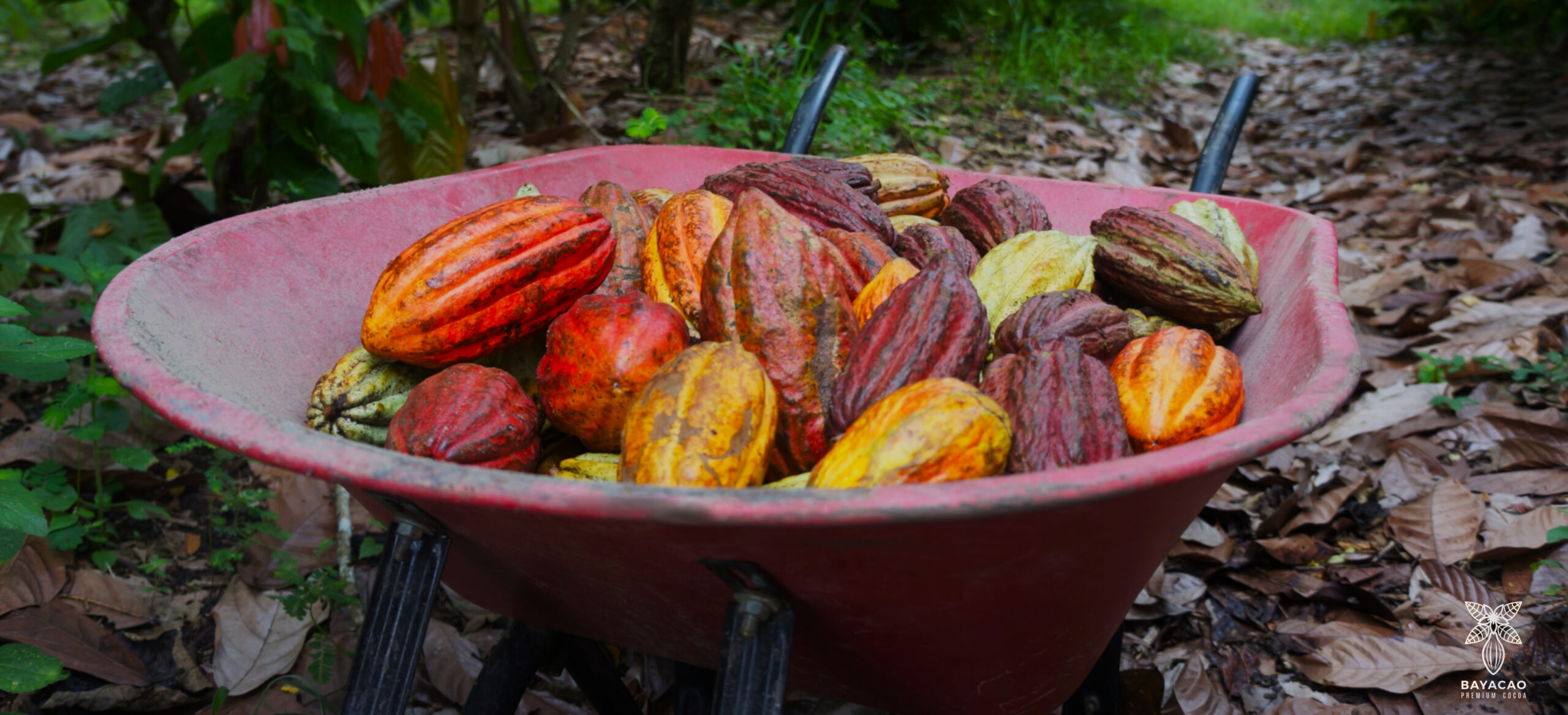
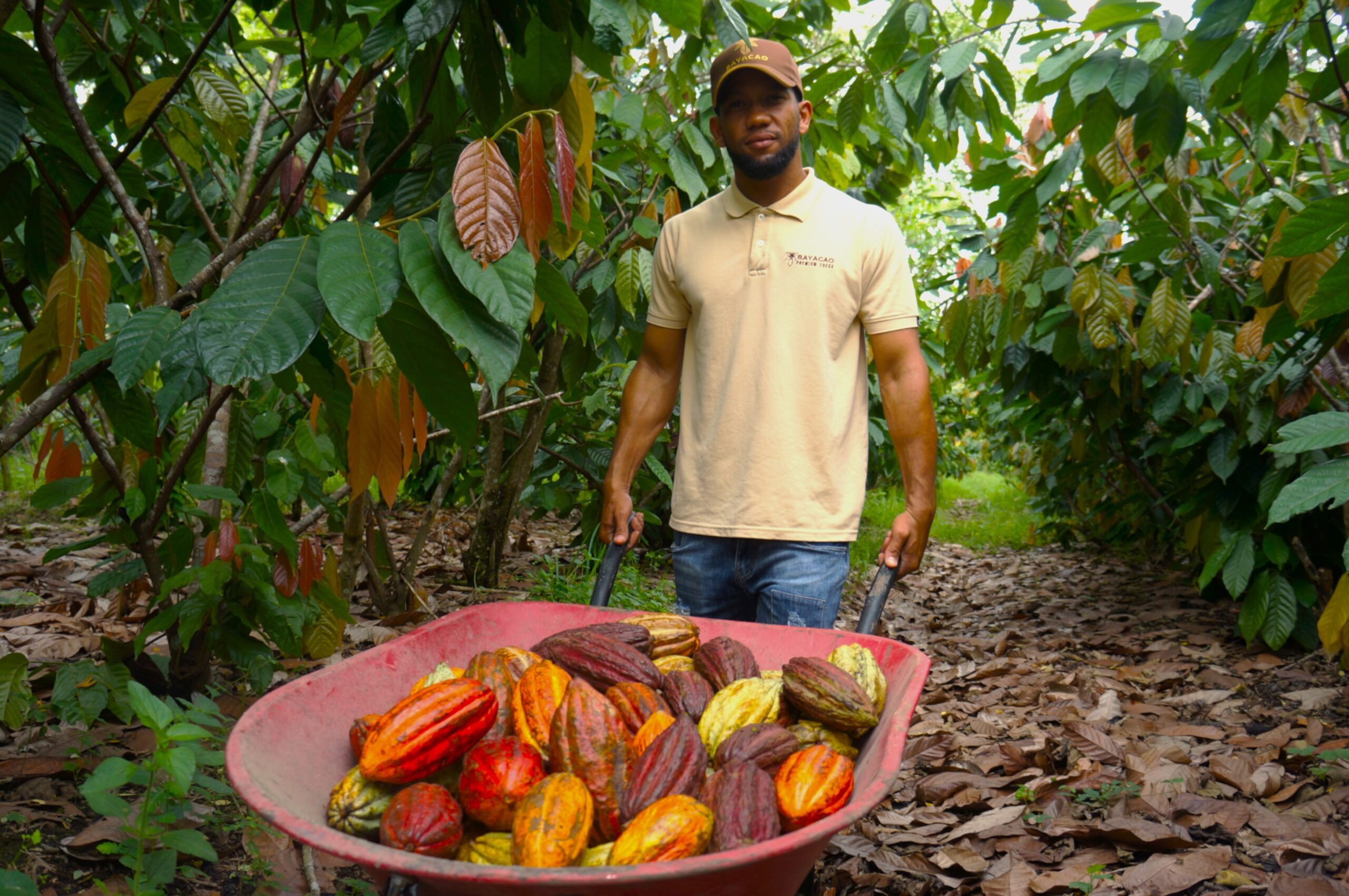
In 2026, the farm achieved its first commercial-scale harvests. Volumes were modest, but encouraging. These first results marked an important transition from establishing the plantation to bringing it into production, giving us the confidence to begin the next stage of investment.
Our plantation is progressively approaching productive maturity. As more plots begin bearing and our harvesting and post-harvest practices are refined, our ambition is to produce cocoa of exceptional quality with increasing consistency.
Preparing for a New Scale of Production
Building on the experience of 2026, we are beginning to modernize and mechanize harvest collection using an approach adapted from industrial plantation operations.
This includes a new harvest collection unit and a platform-based collection system designed to organize the movement of harvested pods from the field to processing points. Our aim is to develop a practical, efficient system suited to the terrain, planting layout, and requirements of cocoa production.
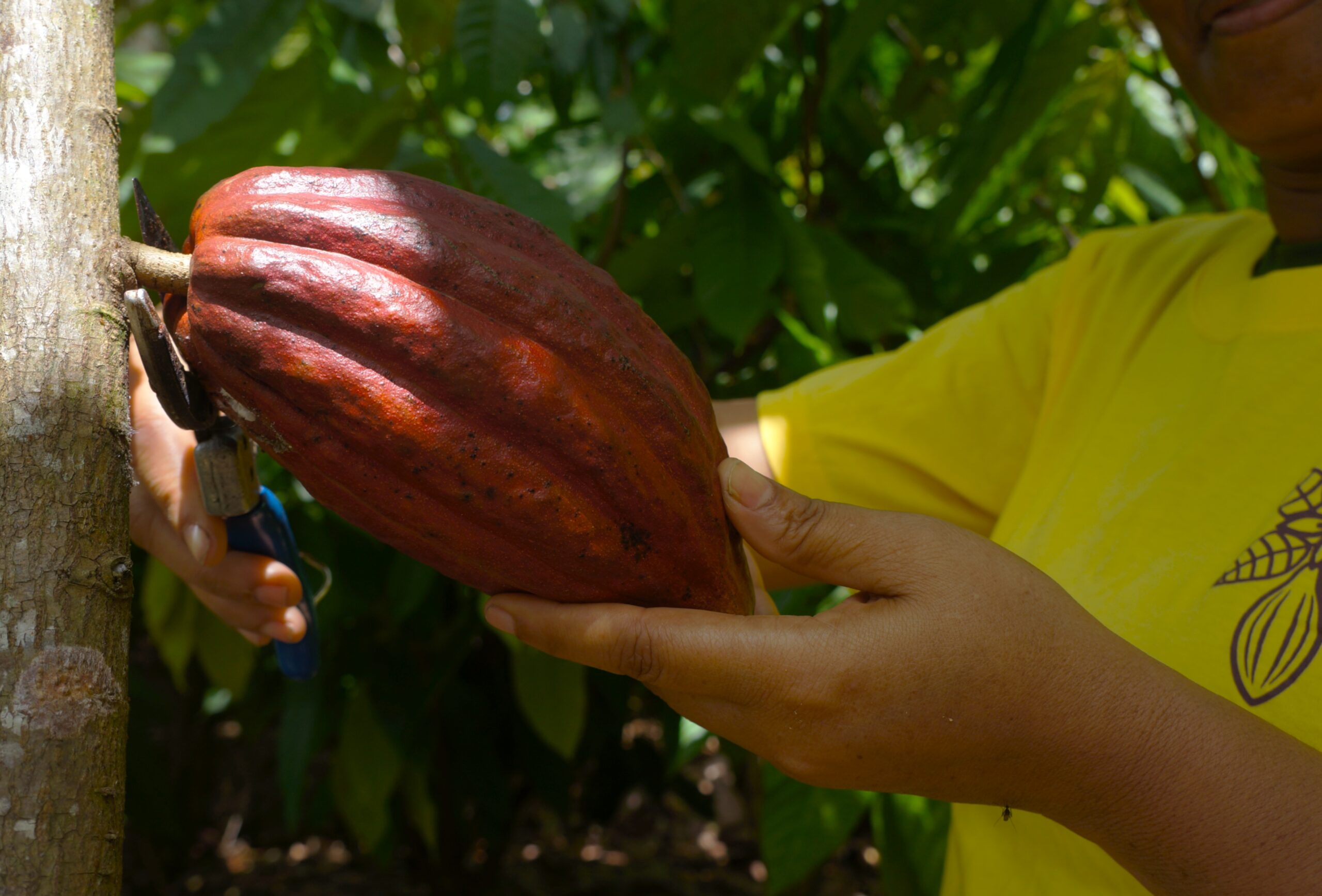
We are also beginning our first trials of mechanized cocoa pod opening with our equipment partner, Wilpac. These trials will help us assess how machinery can support the extraction and collection of fresh cocoa beans while preserving their integrity and quality.
Mechanization will be introduced progressively, through field testing and evaluation. Each step must support careful handling, reliable operations, and the quality of the final product.
Our Priorities for 2027
Our next stage of development is built around five priorities:
- Bring all planted plots into production. Support the progressive entry into bearing of the plantation, with the objective of achieving a larger harvest as the trees mature.
- Complete planting and fill remaining gaps. Plant the small areas that remain unplanted and replace missing trees to improve the continuity and productive potential of each plot.
- Finalize and validate our harvest collection system. Test and refine the new collection unit, platform-based logistics, and working methods under actual harvesting conditions.
- Evaluate mechanized post-harvest equipment. Continue trials of pod-opening machinery and assess equipment for fresh bean collection, handling, and loading into fermentation systems.
- Pursue organic certification and strengthen environmental protection. Seek organic certification for the farm and begin protecting the river and stream corridors within the property. This work will also contribute to our broader effort towards Rainforest Alliance certification.
One Integrated Production Chain
The farm is an integral part of Bayacao’s production chain, working in close coordination with our modern processing factory at Cruce de Pajón, Monte Plata, which demonstrated its operational effectiveness in 2026.
We will begin fermenting our farm-grown cocoa on-site, allowing the first stages of flavour development to take place close to the harvest. The fermented beans will then be transported to Cruce de Pajón for drying in our modern processing facilities.
This integration will connect plantation management, harvesting, fermentation, and drying within one coordinated system, supporting our ambition to deliver distinctive, consistently high-quality cocoa.
A Continuing Commitment to Our People and the Environment
Since 2024, we have discontinued chemical inputs on the plantation as part of our transition towards organic production. Field maintenance currently relies on manual work, while we progressively introduce and test mechanization for harvesting and post-harvest handling. In 2027, we will seek organic certification to formally recognize this transition, subject to the applicable requirements and independent verification.
We will also begin protecting the river and stream corridors that cross and border the farm. Our aim is to preserve the vegetation along these waterways, support connections between forest habitats, and strengthen the protection of water and biodiversity. These actions will form part of our work towards Rainforest Alliance certification.
Our commitment to our people remains central to this development. The farm provides local employment and opportunities to build skills in grafting, pruning, harvesting, and other agricultural activities. Investments in protective equipment, water, electricity, sanitation, transport, and operational infrastructure have accompanied the plantation’s development.
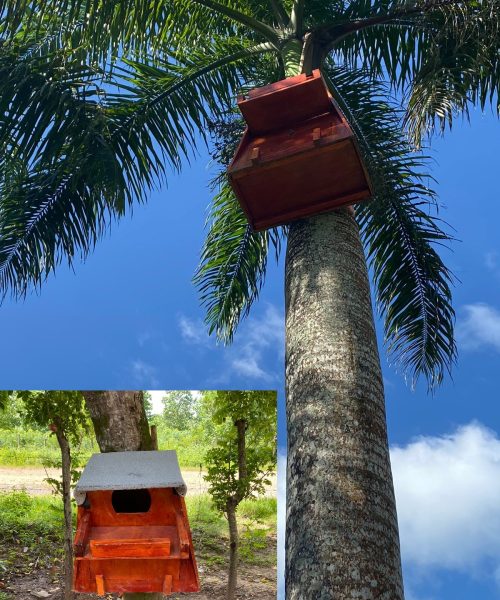
We also continue to explore practical ways to support biodiversity. Nesting boxes installed in royal palms are intended to encourage native Ashy-faced Owls to establish themselves on the farm and contribute to the natural management of rodents.
Across these initiatives, our objective is to build an economically viable cocoa plantation that creates lasting value for our employees, communities, customers, investors, and other stakeholders while keeping its environmental impact as low as possible. We see long-term economic performance, responsible working conditions, and environmental protection as connected foundations of the same business.
The first commercial harvests of 2026 represent a beginning. In 2027, our focus is to build on that foundation: a more productive plantation, tested harvesting systems, stronger environmental protection, and an integrated post-harvest process capable of expressing the full quality potential of Bayacao cocoa.